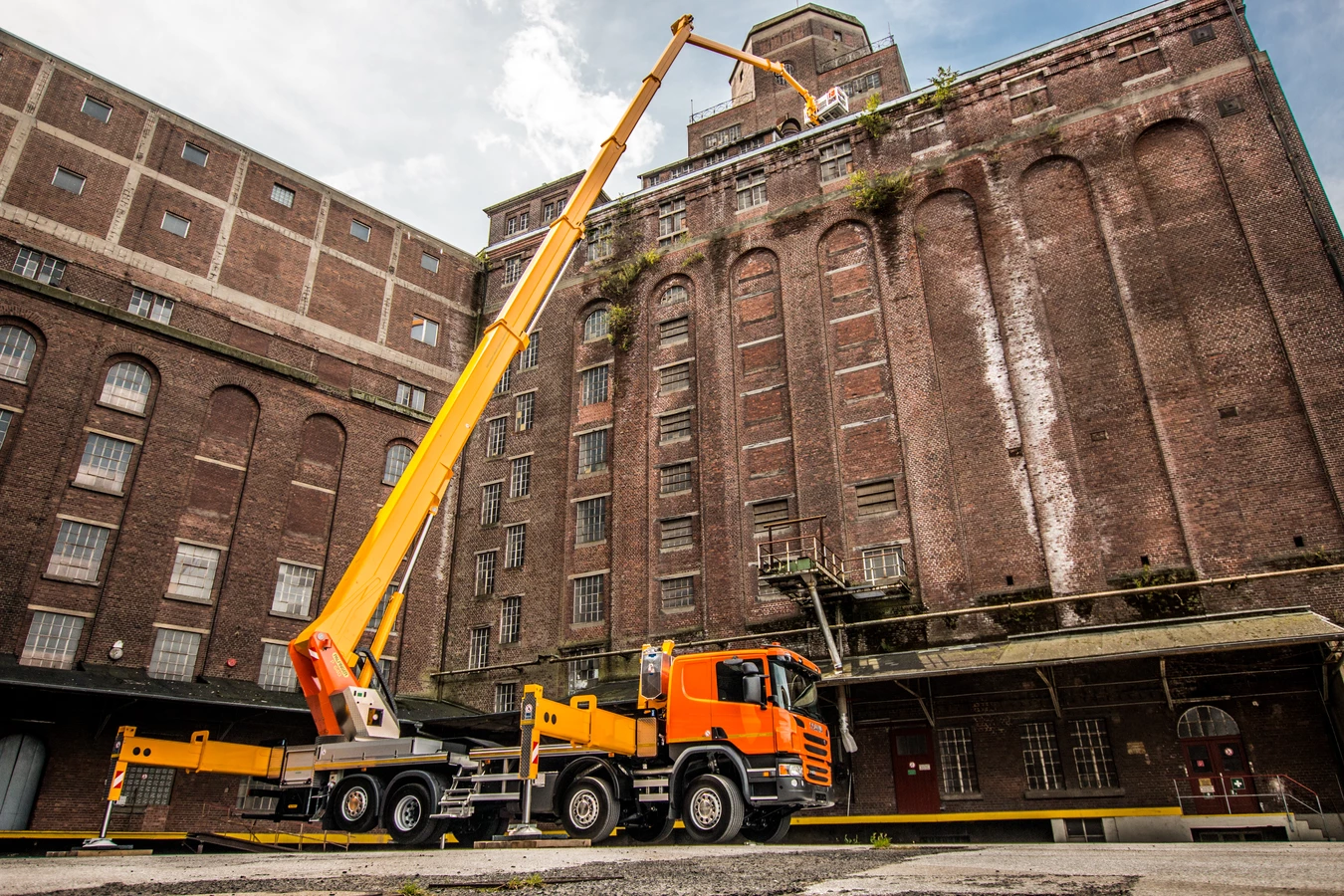
Man lift trucks, often simply called “man lifts” or “aerial work platforms” (AWPs), have become ubiquitous in a wide range of industries, from construction and warehousing to utilities and filmmaking. These versatile machines, designed to safely elevate workers to significant heights, are not merely tools for reaching high places; they are fundamentally revolutionizing workplace safety and access. By providing a stable, secure, and adaptable platform, Vantage man lift truck mitigates numerous hazards associated with traditional elevation methods, thereby enhancing operational efficiency and, most importantly, protecting lives.
The Evolution of Elevated Work: Beyond Ladders and Scaffolding
Ladders, despite their simplicity, are a leading cause of workplace injuries, primarily due to falls from improper setup, overreaching, or instability. Scaffolding, while offering a more stable platform, requires significant time for assembly and disassembly, specialized training, and can be cumbersome to relocate.
Early designs, though rudimentary, demonstrated the immense potential of hydraulic and mechanical systems to safely lift personnel. Over the decades, continuous innovation has led to the sophisticated, highly maneuverable, and safety-feature-rich machines we see today. This evolution has not only expanded the possibilities of elevated work but has also fundamentally reshaped safety protocols.
Key Features of Man Lift Trucks That Enhance Safety
The design and technological advancements in man lift trucks are centered around ensuring the utmost safety for operators and ground personnel. Several key features contribute significantly to this objective:
Stable Platforms and Guardrails: Eliminating Fall Risks
Unlike the precarious perch of a ladder, man lift trucks provide a spacious, non-slip platform enclosed by robust guardrails. This eliminates the risk of falls due to loss of balance or accidental slips. The guardrails, often reinforced, provide a physical barrier, preventing workers from inadvertently stepping off the edge. Some models even feature self-closing gates and toe boards for added security.
Comprehensive Control Systems: Precision and Responsiveness
Modern man lifts are equipped with intuitive and responsive control systems, typically found both on the platform and at the ground level. These controls allow operators to precisely maneuver the platform horizontally and vertically, ensuring optimal positioning without overextending. Emergency stop buttons, proportional controls for smooth movements, and tilt sensors are standard features, all contributing to safer operation. Ground controls provide an additional layer of safety, allowing a supervisor to override operator commands in an emergency or to reposition the lift if necessary.
Load Sensing and Overload Protection: Preventing Catastrophic Failures
Advanced man lift trucks incorporate load-sensing technology that monitors the weight on the platform. If the maximum permissible load is exceeded, the system will prevent further elevation or movement, often triggering an alarm. This crucial feature prevents structural overstressing, potential tipping, and catastrophic failures due to overloading, protecting both the equipment and the workers.
Key Take-Away
In conclusion, man lift trucks have moved far beyond being mere lifting devices. They are integral to modern construction, maintenance, and industrial operations, fundamentally improving safety by eliminating traditional fall hazards and providing stable, secure working environments. Simultaneously, they have revolutionized access, boosting productivity and efficiency across countless workplaces. As technology continues to advance, we can expect man lift trucks to become even smarter, safer, and more indispensable tools for working at height, continually raising the bar for workplace safety standards.
