Introduction
A vehicle inspection is an important part of responsible vehicle ownership. Whether you are preparing for a long road trip, maintaining an older car, or simply checking that everything is working properly, a basic inspection can help identify potential problems before they become serious.
Many vehicle issues provide early warning signs. A tire may slowly lose pressure, a fluid level may fall, a light may stop working, or a brake may begin making an unusual sound. Finding these problems early can reduce unexpected breakdowns and improve road safety.
A professional inspection is recommended for complicated mechanical concerns, but vehicle owners can also perform several simple checks themselves. This guide explains the most useful areas to inspect and what signs deserve additional attention.
What Is a Vehicle Inspection?
A vehicle inspection is a systematic examination of a vehicle’s condition and important operating systems.
Depending on the purpose, an inspection may range from a quick pre-trip check to a detailed professional examination.
A basic inspection can include:
- Tires
- Brakes
- Lights
- Engine fluids
- Battery
- Windshield and wipers
- Steering
- Suspension
- Exterior condition
- Warning lights
- Safety equipment
A professional inspection may go much deeper and involve specialized diagnostic equipment and mechanical testing.
Why Regular Vehicle Inspections Matter
Regular inspections can help identify worn or damaged components before they cause larger problems.
They can also help drivers understand changes in vehicle performance. For example, if a car begins pulling to one side, an inspection may reveal tire pressure differences, alignment problems, or suspension wear.
The earlier an issue is identified, the more options the owner may have for addressing it.
Start With the Tires
Check Tire Pressure
Incorrect tire pressure can affect handling, braking, tire wear, and efficiency.
Check the pressure when the tires are in an appropriate condition for measurement and follow the vehicle manufacturer’s recommended specifications.
Do not use the maximum pressure printed on the tire sidewall as a substitute for the vehicle’s recommended pressure.
Inspect Tire Condition
Walk around the vehicle and examine each tire.
Look for:
- Cracks
- Cuts
- Bulges
- Punctures
- Uneven tread wear
- Objects embedded in the tire
- Excessive tread wear
Any serious damage should be professionally evaluated.
Inspect the Braking System
You cannot always see every brake component during a basic inspection, but you can pay attention to braking performance.
During normal driving, watch for:
- Grinding noises
- Persistent squealing
- Vibrations
- Pulling while braking
- Unusual pedal feel
- Longer stopping distances
These symptoms can indicate brake wear or another issue requiring professional attention.
Check Vehicle Lights
Lighting is essential for both visibility and communication with other road users.
Test the:
- Headlights
- Brake lights
- Turn signals
- Hazard lights
- Reverse lights
- Parking lights
Replace failed bulbs or have electrical faults diagnosed as soon as possible.
A second person can help confirm that brake and reverse lights are operating correctly.
Inspect the Windshield and Wipers
The windshield should provide a clear field of view without significant cracks or damage.
Check the wiper blades for cracking, splitting, or poor cleaning performance.
If the wipers leave large streaks or fail to clear water effectively, they should be replaced.
Also ensure the windshield washer reservoir contains an appropriate fluid.
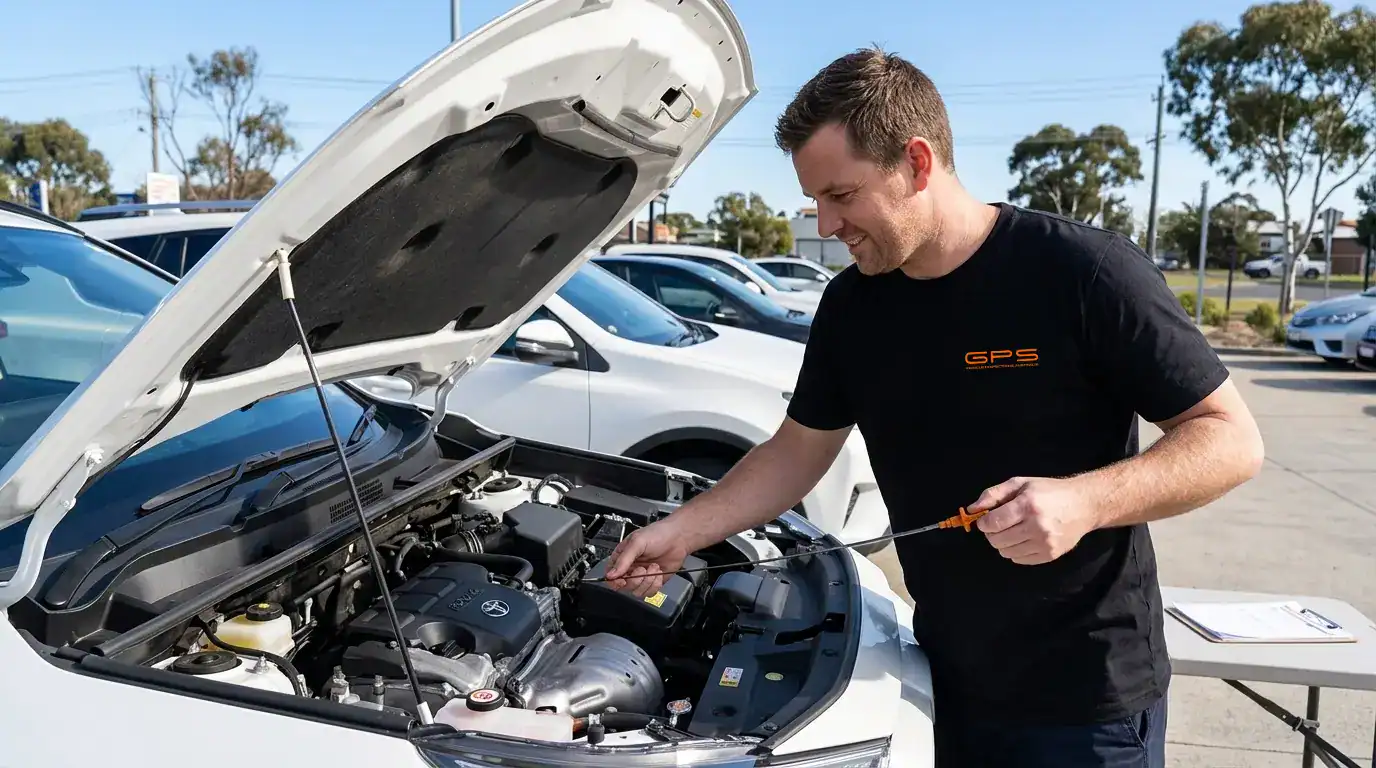
Check Engine Oil and Other Fluids
Depending on the vehicle, fluid checks may include:
- Engine oil
- Coolant
- Brake fluid
- Transmission fluid
- Windshield washer fluid
Always follow the manufacturer’s instructions when checking fluid levels.
A fluid level that repeatedly drops may indicate a leak or another mechanical problem.
Look Under the Vehicle
A quick look underneath a parked vehicle can reveal signs of leakage or damage.
Check for fresh puddles, wet areas, or unusual stains.
Do not crawl underneath a vehicle that is supported only by a jack. If an underside inspection requires lifting the vehicle, use proper safety equipment or have a qualified technician perform the inspection.
Inspect the Battery
Check the battery for obvious signs of damage or corrosion around accessible connections.
Pay attention to starting performance. Slow engine cranking can be a sign of a weak battery or another electrical problem.
If the vehicle has repeated starting difficulties, the battery and charging system should be tested rather than replacing components based only on assumptions.
Examine Belts and Hoses
Accessible belts and hoses can be inspected for visible signs of deterioration.
Look for:
- Cracks
- Fraying
- Swelling
- Loose components
- Visible leaks
Because some components may be difficult to access safely, professional inspection may be necessary.
Check the Suspension and Steering
A basic inspection should include attention to how the vehicle behaves while driving.
Signs of potential suspension or steering problems include:
- Excessive bouncing
- Knocking over bumps
- Steering vibration
- Pulling to one side
- Uneven tire wear
- Unusual handling
If these symptoms appear, arrange a professional inspection.
Pay Attention to Dashboard Warning Lights
Warning lights are an important part of vehicle diagnostics.
When starting the vehicle, observe the dashboard. Some warning indicators may illuminate briefly as part of a normal system check and then turn off.
A warning light that remains illuminated or appears while driving should be investigated according to the vehicle’s instructions.
Never assume that a persistent warning is harmless simply because the vehicle continues to drive.
Inspect the Exterior
Walk around the vehicle before a long journey.
Check for:
- Broken mirrors
- Damaged lights
- Loose panels
- Body damage
- Cracked glass
- Open or unsecured doors
- Signs of fluid leakage
This quick check can take only a few minutes but may identify an issue before you leave.
Check the Interior Safety Equipment
Make sure seat belts are functioning correctly and that seats, doors, and important controls operate properly.
Remove objects that could interfere with pedals or vehicle controls.
If your vehicle has child restraints, confirm that they are installed correctly and remain secure.
Vehicle Inspection Before a Long Trip
A pre-trip inspection should be more thorough than a normal daily check.
Before leaving, consider checking:
- Tire pressure and condition
- Spare tire or appropriate emergency equipment
- Engine oil and relevant fluids
- Brakes
- Lights
- Battery
- Wipers and windshield
- Air conditioning or climate control
- Fuel or battery charge
- Emergency supplies
Address any major concerns before starting the journey.
Professional Vehicle Inspection
A professional inspection is especially useful when:
- Buying a used vehicle
- Preparing an older vehicle for a long trip
- Diagnosing unusual mechanical behavior
- Evaluating a vehicle after an accident
- Preparing for a major repair
- Checking a vehicle with an unknown maintenance history
A qualified technician can use specialized tools to inspect systems that are difficult to evaluate visually.
Example: Catching a Tire Problem Early
Suppose a driver notices that one tire looks slightly lower than the others during a pre-trip inspection.
Instead of ignoring it, the driver checks the pressure and discovers that the tire is significantly underinflated. A professional inspection finds a small puncture.
Fixing the puncture before the trip prevents continued pressure loss and reduces the risk of driving long distances on an improperly inflated tire.
The example demonstrates how a simple inspection can prevent a more serious problem.
Common Vehicle Inspection Mistakes
Checking Only Before Long Trips
Vehicle inspections are useful throughout the year, not just before vacations. Regular checks can help identify developing problems earlier.
Looking Only at Appearance
A clean vehicle can still have serious mechanical issues. Always consider performance, maintenance history, and warning signs.
Ignoring Small Changes
A new vibration, noise, smell, or handling change can provide useful information. Small symptoms should not automatically be dismissed.
Trying to Diagnose Complex Problems Without Training
Basic observation is useful, but complicated mechanical and electrical problems should be handled by qualified professionals.
Frequently Asked Questions
How often should I inspect my vehicle?
Basic checks can be performed regularly, while more detailed inspections should follow the manufacturer’s maintenance recommendations or be performed when symptoms appear.
What should I check before a road trip?
Check tires, fluids, brakes, lights, battery condition, windshield wipers, and emergency equipment. Address unusual noises or warning lights before leaving.
Can I inspect my vehicle myself?
Yes, many basic checks can be performed safely by vehicle owners. Complex mechanical issues should be assessed by qualified technicians.
What does an inspection reveal?
An inspection can identify visible damage, worn components, fluid leaks, tire problems, brake concerns, electrical issues, and other signs that may require further diagnosis.
Is a professional inspection necessary when buying a used car?
It is strongly recommended. A professional inspection can reveal mechanical problems that may not be obvious during a visual inspection or short test drive.
Why should I inspect tires regularly?
Tire condition directly affects traction, braking, handling, and stability. Regular checks can identify pressure problems and visible damage before they become more serious.
Conclusion
A vehicle inspection is a simple but valuable part of responsible vehicle ownership. Regularly checking tires, brakes, lights, fluids, battery condition, visibility, and warning indicators can help identify problems before they lead to breakdowns or safety concerns.
For routine checks, a few minutes of careful observation can make a difference. For complicated issues or major purchases, professional inspection provides a much deeper assessment.
Making vehicle inspection a regular habit can improve reliability, support safer driving, and give owners greater confidence every time they get behind the wheel.
