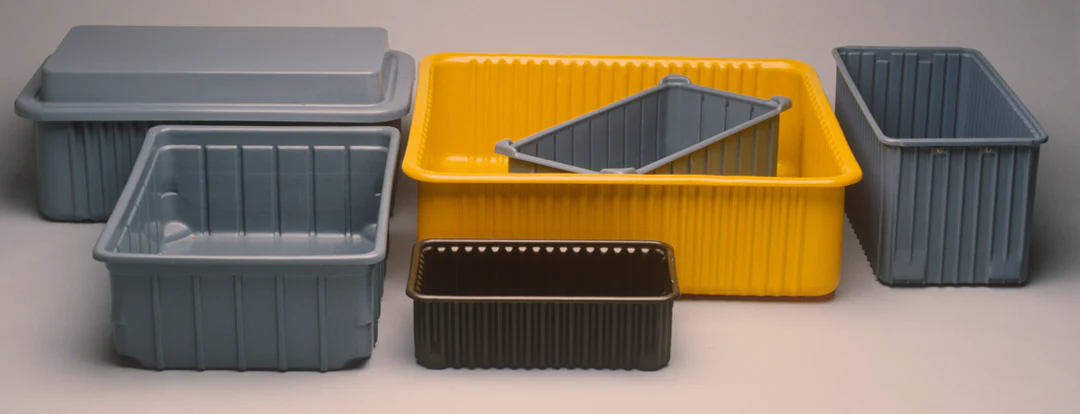
In the intricate dance of the global supply chain, where goods traverse continents and oceans, and countless products reach our doorsteps daily, there’s an often-overlooked yet utterly indispensable component: material handling containers. Far from being mere boxes, HDPE material handling containers these unsung heroes of logistics are the fundamental building blocks that enable the efficient, safe, and cost-effective movement of virtually every product imaginable. From the smallest consumer item to the largest industrial machinery, the global economy relies heavily on the diverse array of material handling containers that streamline operations at every stage of the supply chain.
The Foundation of Efficiency: Why Containers Matter
At its core, material handling is about optimizing the flow of goods. Containers are central to this optimization for several critical reasons:
- Space Optimization: Designed for stacking and intermodal compatibility, containers maximize the utilization of storage space in warehouses, on trucks, trains, and ships.
- Speed and Automation: Standardized container dimensions enable the use of automated handling equipment like forklifts, conveyors, and robotic systems, significantly accelerating loading, unloading, and sorting processes.
Without these fundamental benefits, the sheer volume and complexity of global trade would quickly overwhelm existing infrastructure, leading to bottlenecks, increased costs, and widespread delays.
A Diverse Ecosystem of Containers
While ISO containers dominate international shipping, the world of material handling containers extends far beyond these behemoths. A vast ecosystem of specialized containers addresses specific needs within warehouses, manufacturing plants, and regional distribution networks.
Pallets and Pallet Collars
The humble pallet, though not a container in itself, is the primary platform for unitizing goods within warehouses and for domestic shipping. Often made of wood, plastic, or metal, pallets allow goods to be easily moved by forklifts and pallet jacks. Pallet collars, essentially modular wooden or plastic frames, can be stacked on a pallet to create a sturdy, reusable box, offering flexibility for varying heights of goods.
Intermediate Bulk Containers (IBCs)
Bulk liquids, powders, and granular solids are what IBCs are made for moving and storing. They are a step up from drums in terms of capacity and efficiency.
- Flexible IBCs (FIBCs or “Bulk Bags”): Large, woven bags (typically polypropylene) capable of holding hundreds or thousands of pounds of dry flowable materials like grains, chemicals, or minerals. They are cost-effective and foldable when empty.
- Rigid IBCs: Often plastic or metal containers within a rigid cage, designed for liquids or semi-solids. They are reusable, stackable, and have built-in dispensing valves, common in the food, chemical, and pharmaceutical industries.
Collapsible and Reusable Containers
Sustainability and return on investment are driving the increased use of collapsible and reusable containers. These are designed to fold flat when empty, significantly reducing return shipping costs and storage space. Found in both plastic (e.g., collapsible bulk containers, hand-held totes) and metal (e.g., wire mesh containers), they are prevalent in closed-loop supply chains, particularly in automotive, retail, and food industries.
Conclusion
Material handling containers are more than just vessels; they are the circulatory system of the global supply chain. From the massive ISO shipping containers traversing oceans to the humble plastic bins moving goods within a warehouse, each type plays a crucial role in ensuring products reach their destinations efficiently, safely, and economically. As global trade continues to expand and evolve, driven by technological innovation and a growing emphasis on sustainability, the design and functionality of these essential components will also continue to adapt, further solidifying their indispensable position as the silent powerhouses of our interconnected world.
