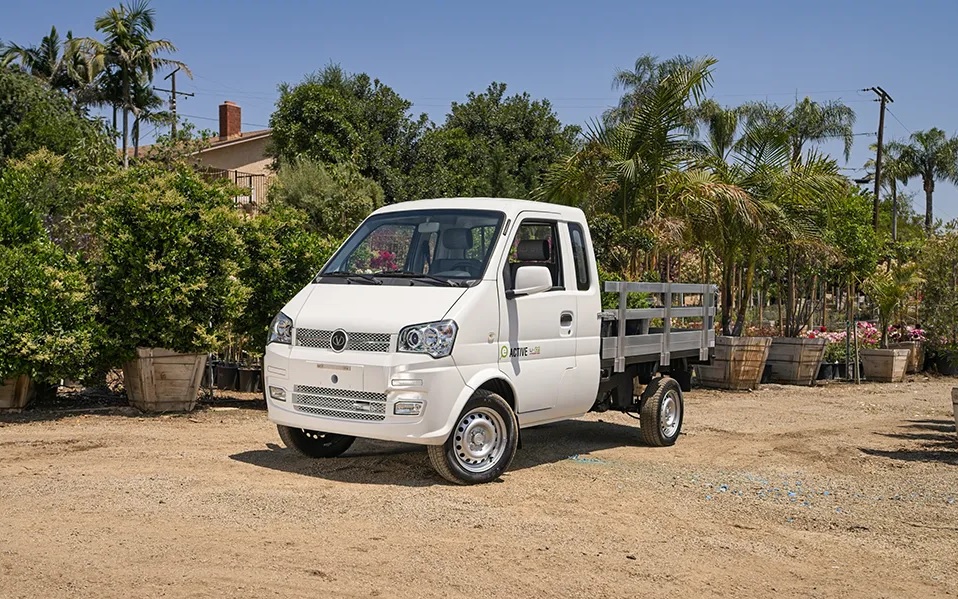
Your tractor is likely a critical part of your daily operations if you own a farm or work in agriculture. Despite all that durability and work ethic, tractors are used to plow fields, pull trailers or lift loads. However, lately, many farmers and estate owners have discovered low speed vehicles for farms as a viable means to get things done.
But can an LSV truly take the place of your tractor? It is based on what you do with your tractor and how much the features matter to you. Let’s break it down.
What is a Low Speed Vehicle?
A Low-speed Vehicle (or LSV) is a small motorized vehicle usually powered by an electric or gas operating engine, the power and speed of which allow it to travel at a maximum speed greater than 20 mph but not more than 25mph. It is tiny, not much bigger than a golf cart, but potentially way more powerful and versatile. LSVs are often used for:
- Hauling people around the farm or estate
- For tools, small equipment, and light loads
- Transport of fresh produce or cargo from one destination to another.
Long-distance buses are more environmentally friendly if powered by electricity and cheaper to operate than a car.
Difference Between LSV and Tractor
Power and Strength
- Tractor – used to plow the ground with a large trailer, or lift heavy weights.
- LSV – Best for lighter work. It handles moderate loads but is not ideal for heavy pulling chores in the field or towing a large trailer.
Speed
- Tractor- Generally the slower-moving option, but built for stability and brute power.
- LSV -Tractor on the farm so you can travel short distances around your property
Maintenance
- Tractor — Very high maintenance engine, tires used by hydraulics.
- LSV – Often, fewer maintenance considerations, primarily electric.
Cost
- Tractor — Expensive purchase and maintenance.
- LSV – Less expensive to purchase and far less pricey to operate.
LSV Used for a Tractor replacement
If the only thing you’ve been using your tractor for is light work like:
- Hauling feed, seed, or small equipment at your farm
- Labor displacement or relocation of visitors from one place to another.
- Carrying Harvested Crops for Short Distances
- Running errands on your land
In such cases, LSV can extend your vehicle range, decrease fuel consumption and operating costs, and speed up the movement of your work.
When You Still Need a Tractor
Still, A tractor is a must if you have to execute:
- Plow or till the soil
- Pull heavy farm equipment
- Haul large trailers or loads
- Work on rougher, uneven terrain that requires more power
In short, if you work with high-powered, heavy-duty machinery, we can’t find a replacement for this beautiful beast, a tractor
Benefits of Using an LSV
A great farm addition. While it cannot replace your tractor, an LSV has the potential to:
- Environment-friendly – Electric LSVs are emission-free, making the ambience better.
- Affordable: Costs less on fuel, electricity, and maintenance.
- It comes with easy-to-use facilities – like its spacious after-volume and comfortable seat.
- Quiet operation – Quieter than a tractor, which is excellent for livestock and workers.
Final Thoughts
A Low-Speed Vehicle can’t do everything a tractor does, but it could be an intelligent swap for some everyday tasks. Most farmers are finding the best balance of power, speed, and cost savings by using both: an LSV for lighter jobs where they can be productive without spending extra money on fuel and amortization costs, but also using a tractor in case they need to pull heavy weights.
If you use your tractor for little errands or minor hauling, running those jobs through an LSV is time- and cost-saving and helps save your tractor from wear. Ultimately, according to your work split between heavy and light jobs, the correct answer is farm-dependent.
